My 2025 Reading List
Reading is my favorite pastime. Some men love to hunt. Others prefer to fish or play golf frequently. Many men enjoy working with wood or fixing up old cars. I like several of those things, but none so much as holding a book in one hand and a cup of black coffee in the other.
Last December I decided to keep track of my reading in order to publish the list in this blog and on social media. I am going to list the in chronological order of my reading and give brief comments on them. I enjoyed most of them. A couple of them were more of a chore. Some were pure delight! Several of the books were not written by Christian authors and, accordingly, present un-Christian worldviews and values (in spite of being good literary works). I prefer to read widely—especially well-known works of literature. I kept a little journal and recorded each title along with the date I finished the book and a few brief notes.
Without further ado, here’s the books I read in 2025.
The Bible (God)
I normally read six chapters of Scripture in the morning (3 Old Testament, 1 Psalm/Proverb, 2 New Testament) 6 days per week (I read my preaching text on Sundays). This usually puts me through the Bible in about 250 days. For a few years I read the Bible 2x per year. I estimate that I’ve read through the Bible about 30 times since I started at age 20, and it remains wonderful every time!
The Tower of Babel (Bodie Hodge)
This was a good read to start the year. I love Answers in Genesis more than any other Christian ministry I can think of, and this book did not disappoint. Chapter 17 was a bit of a slog to get through, being 70 pages long. Other than that, I found Bodie’s trace of the world’s ancestry back to Noah’s family fascinating.
Desiring God (John Piper)
“God is most glorified in us when we are most satisfied in Him.” This book is John Piper’s manifesto on what he calls “Christian Hedonism.” It is an excellent and convincing book, and I highly recommend it. It is not an easy read, though, so be ready to invest much mental effort.
Christianity & Liberalism (J. Gresham Machen)
Machen’s major assertion is that “Liberalism” (by this he means liberal “Christianity”) is, in fact, not Christianity at all. Liberalism is a completely different religion than historic, biblical Christianity. He eloquently and convincingly proves his point by comparing the two throughout a survey of several cardinal Christian doctrines.
If you replace “Liberalism” with “Progressive,” Machen’s argument becomes just as relevant today as it was one hundred years ago when he
published it.
Happy Lies (Melissa Dougherty)
This book exposes the influence of “New Thought” philosophy on Christianity that now manifests itself with self-obsession and the search for self-empowerment. She brings good content, but writes in a more conversational style than I prefer. The book needs better editing and several sentences were poorly written. Melissa Dougherty is a YouTuber and this was her first book. Happy Lies is a good resource for the subject is covers.
Strange New World (Carl Truman)
I came across Carl Truman through the “Mortification of Spin” podcast, and picked up this book as a result. It is a well written, deeply thoughtful exploration of what is the modern concept of the “self.” Truman traces its origins and demonstrates its historical development into the modern expressions of the LGBTQ+ community.
The Shallows: What the Internet is Doing to Our Brains (Nicholas Carr)
I heard about this book on a podcast (cannot remember which one). I do not think Carr is a Christian, so he writes from a Darwinian point of view. In spite of that, he makes some good observations. He demonstrates how the use of computers and internet/phones has changed the way we think. There was one chapter in this book that plodded along for a while, but Carr’s overall use of clinical data to bolster his arguments is convincing. I cannot recommend this book highly enough.
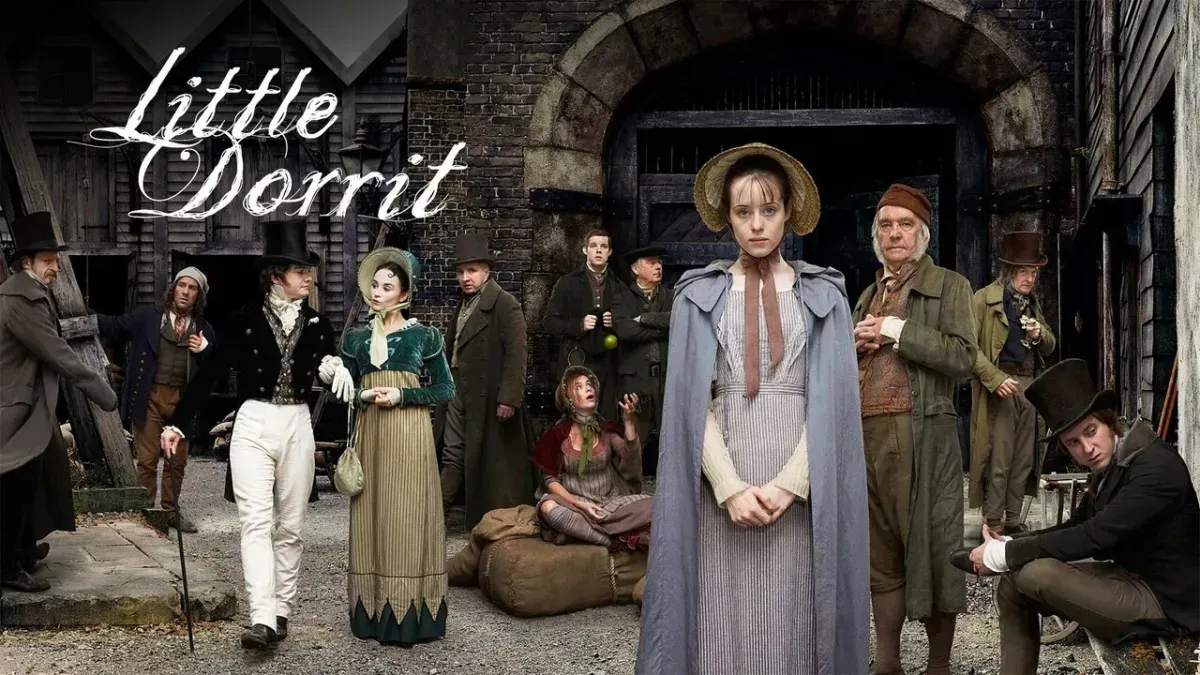
Martin Chuzzlewit (Charles Dickens)
Charles Dickens is my favorite author for several reasons. One of those reasons shines through these pages: poetry. Dickens writes his narratives in vivid, poetic imagery and style. It is not quite poetry and not quite prose. He makes the perfect hybrid. Most modern readers are bored by this style, but it is, perhaps, my favorite feature. The BBC did a good miniseries of this book a while ago, but watching a movie adaptation of Dickens never can capture the beauty of his pen.
The Widening of God’s Mercy (Richard & Christopher Hays)
A friend recommended this book to me and asked my opinion. The book was written for one singular purpose: to convince Christians to abandon biblical teaching in the area of sexual morality and accept the LGBTQ+ movement’s teachings on the subject. The authors make their case by attempting to prove that God changes (employing the Bible’s anthropomorphic descriptions of God). If they can prove that God changes, then they can prove that God’s decisions and values concerning sexuality have also changed since the Bible was written. I found this book entirely unconvincing especially because the “exegesis” in it was very shoddy. The authors are very talented writers, but they lack in logic and persuasiveness. I wrote a detailed report on this book, and I might publish it here at some time in the future.
The Way We Live Now (Anthony Trollope)
I read this for the pure fun of it & was not disappointed. This was the first Anthony Trollope novel for me. It was unusual in that, I hated all the characters and yet enjoyed the book. Usually, I don’t like a book unless I’m fond of at least one of the protagonists. I will look to read more Trollope in the future.
Through Gates of Splendor (Elizabeth Elliot)
Elizabeth Elliot, wife of missionary and martyr, Jim Elliot, recounts the mission of the five men who were killed by the Auca Indians in Ecuador while attempting to reach them with the gospel. Most of the book describes the men and their mission with their death at the end. Explanation in more detail is given in two epilogues. I finished this book wiping tears. It was truly inspirational and challenging.
To Kill a Mockingbird (Harper Lee)
I typically do not like to read books about racial tensions and prejudices (not for any aversion to that history, but for desire to avoid the sadness the subject foists upon me). I was pleasantly surprised when I found this book to be a lot of fun! Harper Lee was an excellent story teller. This novel is as much a “coming of age” story as it is a civil rights narrative. The moral of the story was excellent, and I was absolutely surprised when I discovered who the “Mockingbird” was at the end!
As a Christian, I found two parts of this story to be deleterious. First, like many secular books, there is some foul language. Secondly, there is a scene that mocks Christian missionaries and missionary societies. Harper Lee displays astonishing ignorance of Christianity and she promotes an anti-Christian (pro-pagan) message in that scene. Other than that, the book was worth the read. Like so many books, one must eat the meat and spit out the bones.
The Return of the Native (Thomas Hardy)
Thomas Hardy is an excellent writer and can truly captivate with the turn of a phrase. This was another book that I enjoyed without liking most of the characters. It was interesting, but I’m not quite sure what the point of the story was. Hardy employed numerous biblical allusions in spite of his painting a sub-Christian view of marriage. If anything, this book was a masterpiece of dramatic irony. Characters make several weighty decisions without knowing what the reader knows -- to disastrous effect. I appreciated the tension built by this device.
The Apostles’ Creed (Albert Mohler)
Mohler makes an excellent exposition of the gospel from cover to cover! I thoroughly enjoyed this book. Strong in its conclusion, this work culminated with a call for readers to yearn for heaven and “the life everlasting” with convincing effect.
The Last of the Mohicans (James Fenemore Cooper)
This is, perhaps, the most famous of Cooper’s Leatherstocking Tales. I would rank this book as my second favorite of this year. Its a great story!
Hollywood made a movie under this title with Daniel Day-Lewis playing Hawkeye. I cannot state this strongly enough: the movie is nothing like the book. The book is much better, and the characters are far deeper. The movie, though, does have a better soundtrack.
The Adventures of Tom Sawyer (Mark Twain)
This was a lot of fun to read. The bottom line is “Boys will be boys.” I found a humorous irony in that Tom and Huck fear the evil robber, Injun Joe, but at the same time they aspire to be robbers themselves. Nobody captures the inner-workings of squirrelly little boys than Mark Twain!
They Had Names (Nathaniel Jeanson)
This was my favorite read of the year. The book traces the history of pre-Columbian native populations in the Americas. A Harvard PhD in cell and developmental biology, Jeanson uses genetic and linguistic data matched with archeological clues to make his case. The supreme feature of this book is that Jeanson is a Christian (works for Answers in Genesis), and he presents his work from that worldview and with obvious, godly love for the indigenous peoples.
Dispensationalism Revisited (Kevin Bauder, Editor)
This book features a series of academic-level essays on the subject of Dispensationalism. Produced by Central Seminary, this is a pro-dispensationalism work dedicated to Dr. Charles Hauser. It is not an easy read, but it is a good read for pastors.
A Young Scholars’ Guide to Poetry (Maggie Hagan & Melissa Craig with Dr. Hannah Eagleson)
I’ve loved poetry for most of my adult life (didn’t care for it as a child). With a desire to write poetry myself, I found this middle-school level poetry textbook and gave it a shot. I loved it because it clearly teaches the fundamental mechanics and structures of poetry. The book uses examples from famous poets and introduces them with concise biographical sketches. I learned much! I will probably re-read it at some point.
The Old Man & the Sea (Ernest Hemmingway)
I found this book on the shelf of the english classroom at Central A&M high school while substitute teaching in 2024. That day, I read about half of the book before the final bell sounded. In October of this year, I found myself subbing for the same teacher, recognized the classroom, and immediately knew what I had to do. I found the book, located the place I had left off, and finished the story!
This was an interesting read, but I’m not sure what the point of the story was. It simply describes an old man going fishing, hooking the biggest fish of his life, and losing it piece by piece to sharks before he makes it back home.
Fault Lines (Voddie Baucham)
This is a good, biblical explanation of the problems with Critical Theory — especially Critical Race Theory. Baucham discusses its origin and infiltration into evangelicalism. Sadly, I heard the news that Voddie Baucham died while I was reading this book. I met him at the Ark Encounter during the Answers for Pastors Conference in 2019. We stayed in the same hotel.
Of Mice & Men (John Steinbeck)
I found this book in the school library while subbing for the librarian. I picked it out because I had heard of it and of Steinbeck. I finished the book out of sheer determination (it was only 119 pages). This is a horrible book — riddled with foul-mouthed profanity and blasphemy, and predictable in its storytelling. Other than an excellent use of foreshadowing (the dog’s execution = Lennie’s execution), this story wasn’t good.
When I finished the book, in disgust, I jotted the following note in my journal: “I’m bored with these ‘lost-generation’ cynics like Hemingway, Fitzgerald, and Steinbeck. They write nihilistic, empty, hopeless, pointless stories with unlikable characters.”
Crime & Punishment (Fyodor Dostoevsky)
Recommended by a friend, I found this book at first disturbing, but thoroughly well written. A young college student, Raskolnikov theorized that certain men of genius should be and were justified in shedding blood in order to do great things (citing Napoleon as an example). Raskolnikiv puts his theory to the test by murdering an old pawn-broker woman and her sister. He soon finds out that he must not be a man of genius because he is unable to cope with what he did. Raskolnikov ends up going to prison while never admitting that what he did was wrong.
Dostoevsky aptly describes the miserable and disappointed protagonist near the end of the book. “Perhaps it was just because of the strength of his desires that he had thought himself a man to whom more was permissible than to others.” That description captures the likeness of most criminals throughout history.
Legacy Interrupted (Shlomo Ben Asher)
When my wife and I went to Israel in 2023, Shlomo was our Israeli guide. He was excellent! He wrote this book to chronicle his family’s suffering during the Nazi Holocaust. I have no words to describe it — Just tears . . . and rage! There are people today who try to minimize the Holocaust. Don’t listen to them. They are antisemites and idiots.
Five English Reformers (J.C. Ryle)
J.C. Ryle presented five succinct biographical sketches of martyrs burned for their faith by Bloody Mary’s Roman Catholic regime. Ryle chose John Hooper, Rowland Taylor, Hugh Latimer, John Bradford, and Nicholas Ridley as his subjects. Ryle’s purpose was to demonstrate that the Church of England should not drift back toward Rome (a tendency which seemed to vex him in his generation).
The Great Evangelical Disaster (Francis Shaeffer)
Shaeffer posited that the Church (evangelical) sought to accommodate itself to the spirit of the age. This is the great disaster. Written in the early 1980s, this book is quite prophetic!
A Christmas Carol (Charles Dickens)
This was my second reading of this classic. As with all Dickens stories, you can watch the movie, but then you miss the beauty of the written word.
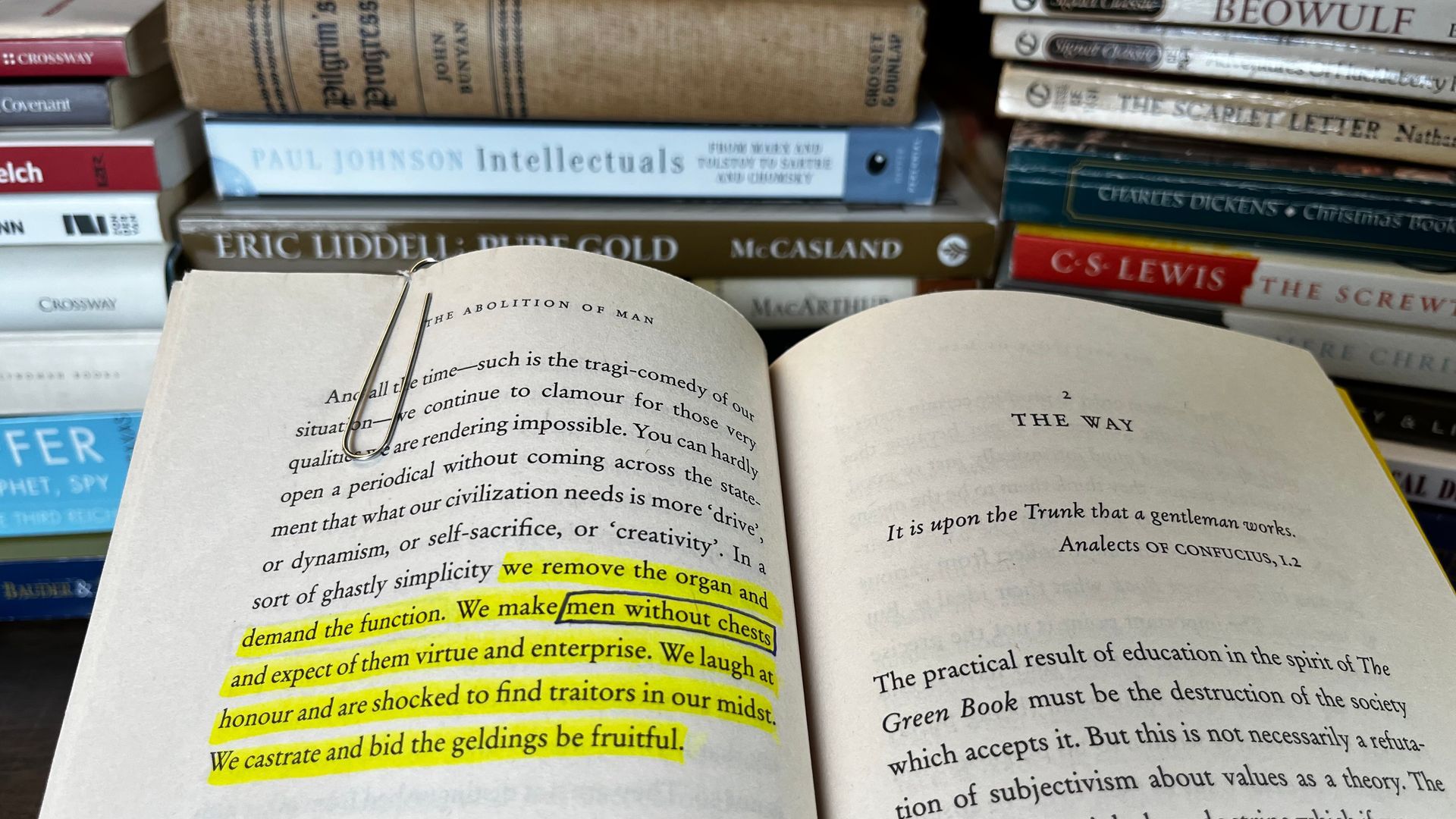
The Screwtape Letters (C.S. Lewis)
Interesting. Insightful. Fun. As always, I read Lewis with caution. He writes some wonderful and thoughtful material, but he also holds to some unorthodox theology.
Gospel Reset (Ken Ham)
Answers in Genesis sent this book to pastors all over the country in 2017 for free. In it, Ken Ham asserts that Western Civilization has been transformed from an “Acts 2” society to an “Acts 17” one. By this he means that the Acts 2 audience at Peter’s Pentecost sermon had a basic knowledge of the biblical worldview while the Acts 17 audience at Paul’s “Mars Hill” sermon did not. Accordingly, we should present the gospel more like Paul did to the Greeks than Peter did to the Jews.
Faithful Leaders (Rico Tice)
This was an excellent and edifying little book for leaders.
Evangelism & The Sovereignty of God (J.I. Packer)
Packer asserts that believing in divine sovereignty does not hinder evangelism, but strengthens it. He anchors this assertion on the “antimony” of divine sovereignty and human responsibility (pp. 18-19). It is an excellent and convincing read. It is well balanced, convincing, and edifying. I found myself challenged and well as encouraged.
Well, there you have it! I read thirty books in 2025, and I hope to read as many in the new year. I am hoping to start out with The Gales of November by John U. Bacon. It is a newly released chronicle of the Edmond Fitzgerald.